Customer Reference

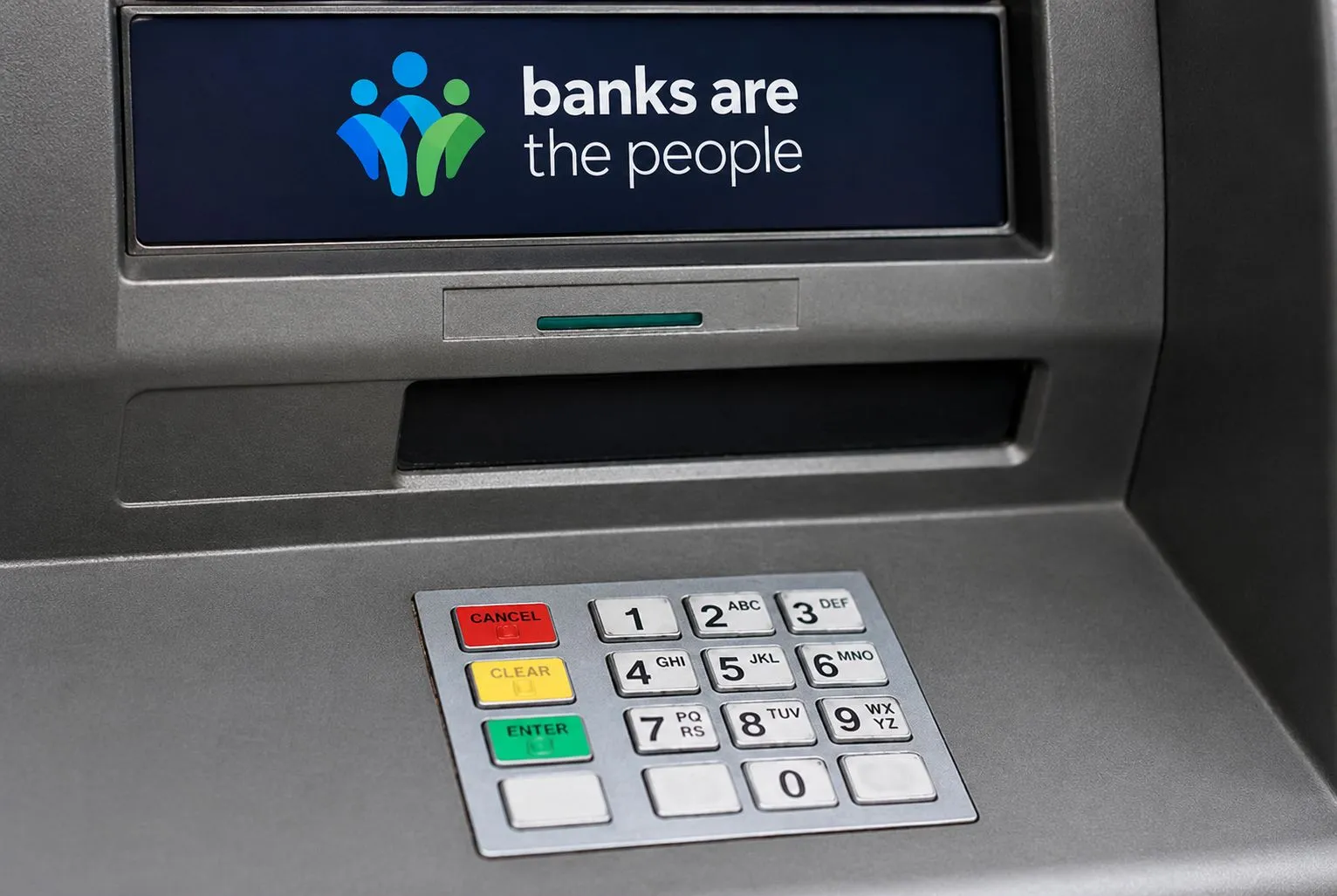
Bank ATM keypad
numbers and letters explained

Every bank ATM Keypad worldwide uses the same keypad layout — a 3×4 grid of numbers paired with letter groups. What looks like a random arrangement on a bank ATM keypad is in fact a decades-old international standard.

3M+
Machines worldwide
1963
Standard established
26
Letters across 8 keys
Close-up of a bank ATM keypad showing numbers and letters on each key
The numbers and letters on ATM keypads follow ITU E.161 — the same standard used on telephone handsets since 1963.

Not arbitrary. An international standard.

The letters visible beneath each number follow ITU E.161, an international standard originally designed for telephone dialling. Each digit is assigned a fixed group of letters: 2 carries A, B and C; 3 carries D, E and F — continuing in sequence to 9, which holds W, X, Y and Z.

Keys 1, 0, * and # carry no letters. This is a convention carried over from early telephony, where those positions were reserved for operator and signalling functions rather than alphabetic input.

Helpful to know: Because the mapping is standardised, any four-letter word can serve as a memorable way to recall your numeric PIN on any ATM Keypad worldwide.
A brief history of the bank ATM keypad

From the first cash dispenser in 1967 to the 3 million machines operating today.

1967

The First Cash Dispenser

Barclays Bank in Enfield, London installs the world's first cash dispenser, designed by John Shepherd-Barron. It used paper cheques treated with carbon-14 rather than a numeric code — security through chemistry. You can read more about this on the Wikipedia ATM History archive.

1972

Numeric Codes Introduced

Lloyds Bank introduces the first PIN-based bank ATM Keypad. The 4-digit format was chosen partly because inventor James Goodfellow's wife could only reliably recall four digits. This design milestone is documented via BBC News coverage celebrating the invention of the personal identification number.

1988

A Global Network

The PLUS network connects bank ATM Keypads internationally, requiring the numeric keypad to become a truly universal standard — the same 3×4 grid appearing on machines from Tokyo to Toronto.

1999

Letter Assignments Matter Again

Predictive text input on mobile phones — using the same key-to-letter mapping found on bank ATM keypads — becomes widespread on Nokia handsets. The letter assignments, long overlooked, suddenly carry everyday relevance.

2007

Touchscreens Arrive

Smartphone touchscreens begin replacing physical keypads in consumer devices. Bank ATM Keypads worldwide retain the physical 3×4 grid — its tactile reliability and accessibility making it the preferred standard for financial transactions.

Today

Still the Standard

Over 3 million bank ATM Keypads operate globally, every one featuring the same keypad layout. The arrangement of numbers and letters — seemingly arbitrary — follows a standard that has outlasted countless other input technologies.

Entering letters on a bank ATM keypad

A bank ATM keypad can represent any letter in the alphabet. Each key press corresponds to a letter group. Entering a sequence of digits produces a word when the digits are cross-referenced against the standard mapping.

  1. 1

    Each digit key is assigned a fixed group of letters. The assignment follows the same sequence on every compliant device.

  2. 2

    To spell a word, press the key that contains the first letter of each character in sequence — one key press per letter.

  3. 3

    Predictive systems cross-reference the digit sequence against a dictionary to determine the most likely intended word.

  4. 4

    On a bank ATM keypad, this allows word-based PIN codes to be entered using only the numeric keys, without additional hardware.

Digit sequenceKey mappingWord
4663GHI · MNO · MNO · DEFHOME
2665ABC · MNO · MNO · JKLBOOK
7225PQRS · ABC · ABC · JKLPACK
3368DEF · DEF · MNO · TUVFEET
9673WXYZ · MNO · PQRS · DEFWORD
5683JKL · MNO · TUV · DEFLOVE

Frequently asked questions about bank ATM keypads

Why does a bank ATM keypad have letters alongside numbers?

The letters originate from the international telephone standard managed by the International Telecommunication Union (ITU), where each digit maps to a specific group of characters. This allows numeric codes to be remembered as words — for example, 5683 maps to LOVE.

Are the numbers and letters on a bank ATM keypad random?

What appears to be a random arrangement is in fact governed by the ITU E.161 structural directive: 2=ABC, 3=DEF, continuing through to 9=WXYZ. The 1, 0, *, and # keys carry no letters, a convention carried over from early telephony.

Can I use letters to remember my bank ATM Keypad PIN?

Yes. Because the key-to-letter mapping is standardised, any four-letter word can be entered as a numeric PIN on any bank ATM Keypad worldwide. Many customers find word-based codes easier to recall than arbitrary digit sequences.

Why is the bank ATM keypad layout different from a calculator?

Calculators place 7–8–9 at the top row; telephone and bank ATM keypads place 1–2–3 at the top. The telephone layout was established by AT&T in 1963 for dialling efficiency. When ATM Keypads adopted telephony-style keypads, they inherited this orientation.